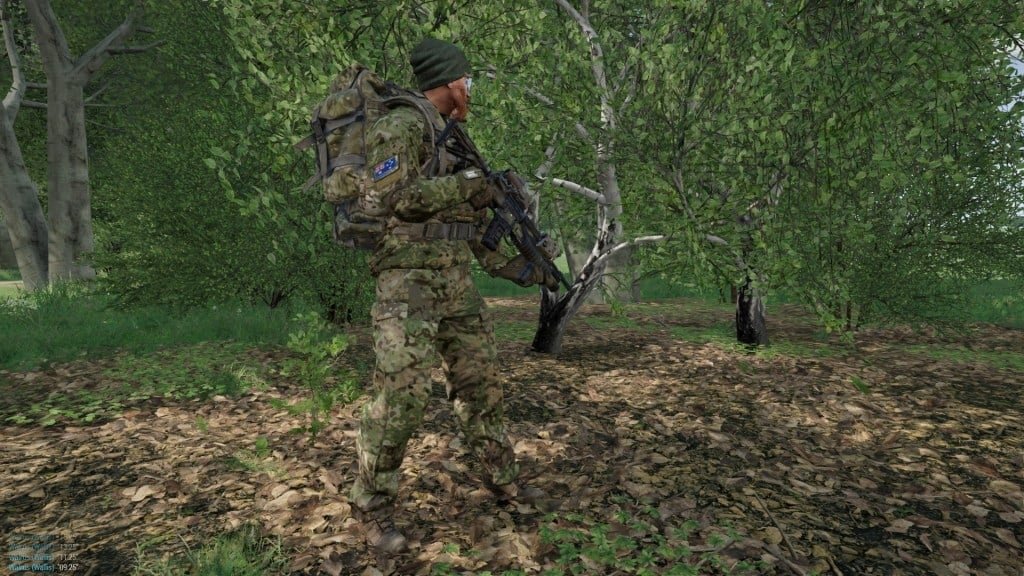
Forest camo patterns

The forest forgives nothing once you stop moving wrong. Between bark, shadow and shifting green, the right pattern is what keeps you off the radar. This page gathers the camouflage built for temperate woodland and forest: from the iconic M81 Woodland and MARPAT to CCE, DPM, Flecktarn, A-TACS FG, Kryptek Mandrake, PenCott GreenZone and the Russian school of Berezka, EMR, Izlom and Partizan. Find your pattern, match your terrain.

Marpat camo

Marpat

The US Marine Corps pixel pattern, MARPAT Woodland scatters green, brown and black micro-blocks that blur the outline at distance. A digital benchmark, it owns dense temperate forest and shaded undergrowth where broken edges beat solid shapes.

Woodland m81 camo

Woodland M81

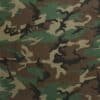
The four-color icon. Born in 1981 from the ERDL pattern, M81 Woodland lays bold green, brown, black and tan blotches across the fabric. Decades of service made it the default look of woodland combat, and it still performs in deep forest.

cce camo

CCE Camo

France’s Centre-Europe pattern, CCE adapts the Woodland concept to European theaters. Its green and brown disruptive shapes melt into temperate undergrowth, hedgerows and mixed forest, making it a staple of French forces and a favorite in milsim and surplus.

DPM Kukla Camo

DPM camo

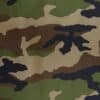
The British Disruptive Pattern Material brushes long green and brown strokes over a sandy base. Built for the woods and hedgerows of Northern Europe, DPM is one of the most recognizable forest patterns ever fielded, and a true classic.

M84 Fleck D Camo

M84 "Flecktarn D" Camo

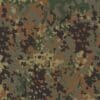
Germany’s Flecktarn scatters dense clusters of green, brown and black dots over the fabric. At a few meters the spots blur into the surrounding foliage, which makes Fleck D one of the most effective woodland patterns for dense, mid-range temperate forest.

Atacs FG Camo

A-Tacs FG Camo

A-TACS Foliage Green trades hard shapes for an organic “pattern within a pattern” of muted greens and earth tones. Designed for temperate and green environments, it delivers depth and a natural break-up that disappears into leafy, shaded woodland.

Kryptek Mandrake

Kryptek Mandrake

Kryptek Mandrake layers a biomimetic background with a sharp foreground grid that mimics branches and shadow. Tuned for green and transitional forest, it creates striking depth and breaks the outline at both close and long range.

Pencott GreenZone Camo

Pencott Greenzone

Built for the heart of the green season, PenCott GreenZone fuses sharp and organic shapes in lush greens and browns. It excels in dense, leafy temperate and tropical forest, blending at close quarters and holding up at distance.

Berezka White Camo

Berezka

Also called “Silver Birch” or KLMK, Berezka uses a high-contrast positive-negative design of green or yellow on a pale ground. A Soviet classic, its leaf-like cells dissolve the silhouette in birch woods and bright, broken-light forest settings.

EMR Digi Flora Camo

EMR "Digital Flora"

Russia’s current-issue pattern, EMR or “Digital Flora” spreads a multi-scale pixel mix of green, brown and tan. Engineered to work across seasons, it blends across forest, field and brush, which makes it one of the most versatile woodland patterns today.

Izlom skol camo

Izlom "Skol"

Izlom, the Russian “Fracture” or “Skol” pattern, throws large angular green and brown shards across the fabric. The bold, jagged blocks break the human shape hard in forest and brush, a favorite of post-Soviet special units and collectors.

Partizan SS Summer leto

Partizan Camo (SS Leto/Autumn)

Partizan layers brushstroke-style elements over a woodland base for a dense, organic look. Built for the deep green of summer forest and heavy undergrowth, it shatters the outline in leafy cover and reads naturally at close range.

Flecktarn camo

Flecktarn

Germany’s Flecktarn scatters dense clusters of green, brown and black dots over the fabric. At a few meters the spots blur into the surrounding foliage, which makes Fleck D one of the most effective woodland patterns for dense, mid-range temperate forest.

Vegetato camo

Vegetato

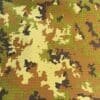
Italy’s Vegetato Boschiva layers organic green, brown and tan shapes for a lush, leaf-heavy look. Issued to the Italian Armed Forces, it melts into dense Mediterranean and temperate woodland, blending naturally at close range while holding its break-up at distance.

Forest camo best sellers

Not sure which to run? Our best-sellers, across every forest pattern, gather the gear our customers trust most: uniforms, jackets, pants and field kit proven under the canopy. From the timeless M81 Woodland to digital MARPAT and Russian EMR, these are the references that earn their place in temperate woodland, picked for effectiveness, durability and unbeatable value.

What is forest camouflage?

Forest camouflage is the family of patterns built for temperate woodland: the mixed forest, undergrowth, bark and dappled light of Europe, North America and northern Asia. The job is to break up the human outline so it scatters into the visual noise of the trees. Three things do the work. Disruptive shapes destroy clean edges, a balance of green and brown matches both foliage and bark, and contrast tuned to mid-range distance keeps you broken up where it counts. Unlike jungle patterns, forest camo leans on brown and shadow as much as green, because temperate woodland is rarely green all the way through.

Forest camouflage

What does forest camo look like? Colors and shapes

The palette balances green and brown, backed by black for shadow and tan or sand for highlights. Green ties you to the foliage, brown to trunks and leaf litter, black to the deep gaps between the trees. Shapes range from the bold blotches of M81 Woodland and the long strokes of DPM to the dense dots of Flecktarn and the pixels of MARPAT and EMR. The denser and shadier the forest, the more a pattern leans on darker greens and browns. Open, sunlit woodland rewards a bit more contrast and lighter tone.

How to choose the best forest camo pattern

There’s no single best forest camo. The right one matches your specific woodland first, then your mission. A deciduous hardwood forest, a dark pine or boreal stand, and an open mixed wood all read differently to the eye.

By forest type

Forest typeWhat to look forPatterns that fit
Dense deciduous / hardwoodStrong green, mid-range break-upM81 Woodland, MARPAT, Flecktarn, Partizan
Pine / boreal (dark, shaded)Darker greens and browns, deep shadowMARPAT, Flecktarn, PenCott GreenZone
Open / mixed woodlandBalanced green-brown, lighter toneCCE, DPM, A-TACS FG, EMR
Birch / bright broken lightHigh contrast, leaf-like shapesBerezka, Izlom
Green-season / heavy foliageLush greens, dense patternPenCott GreenZone, Kryptek Mandrake

By mission and season

Forest changes with the seasons, so the pattern that hides you in July can stand out in November. Summer foliage favors green-heavy patterns, while autumn and bare-branch woodland reward more brown and tan. On the move, bold shapes like Woodland or Izlom mask motion well. Holding a position, an organic pattern like A-TACS FG or Mandrake settles into the backdrop. Match the tone to the light too, since very dark patterns flatten out in open sun.

Forest camo vs woodland camo: what’s the difference?

People use the two almost interchangeably, and that’s mostly fair. “Woodland” usually points to a specific lineage, above all the US M81 Woodland and its four-color descendants. “Forest camo” is the broader umbrella for any pattern built for temperate woodland, from M81 to Flecktarn, DPM, MARPAT and the Russian designs. Put simply, all woodland patterns are forest camo, but not every forest pattern is “Woodland.”

When was forest camouflage first used?

Disruptive woodland patterns trace back to World War II, but the modern era really starts with the US M81 Woodland in 1981, derived from the earlier ERDL pattern. Europe ran its own lines in parallel, from British DPM to German Flecktarn and French CCE, while digital designs like MARPAT and Russia’s EMR brought the pixel approach to the forest from the 2000s onward.

FAQ about Forest camo patterns

Dark, shaded conifer forest rewards patterns heavy on deep green and brown with strong shadow tones, like MARPAT, Flecktarn or PenCott GreenZone. Avoid light, high-contrast patterns that catch the eye against the constant gloom under the canopy.

Hardwood forest shifts a lot with the seasons. In the green months, M81 Woodland, MARPAT and Partizan work well. As leaves drop and brown takes over, lean toward patterns with more tan and earth tone so you match the leaf litter and bare branches.

Yes, it’s one of the most popular choices for woodland hunting. Just match the pattern to your real terrain and season, stay still, and check local rules, since some areas require blaze orange for safety alongside your camo.

Start with a mid-green or brown base, then layer darker and lighter tones using natural foliage, netting or a torn sponge as a stencil. Work from large shapes down to small detail, and keep edges soft so nothing reads as a solid block.

Forest animals blend in to avoid predators or to ambush prey. Mottled coats, bark-like textures and broken patterns scatter their outline against leaves and trunks, the same principle military forest patterns borrow to hide a human shape.

Enter email to save 10% off, one time use
Save 0 % now!